The deadlift has a reputation—it looks intense, technical, and maybe even dangerous. So it’s no surprise that athletes and beginners alike often wonder if the lift is worth the risk.
The truth is, when performed correctly, the deadlift is one of the most effective exercises for building total-body strength, improving athletic performance, and developing real-world functional movement. But like any lift, it can be dangerous if done improperly.
Let’s break down exactly why athletes should deadlift, when they shouldn’t, and how to do it safely.
Why You Should Deadlift

1. Builds Posterior Chain Strength
Deadlifts target the posterior chain—glutes, hamstrings, and lower back—which is essential for nearly every sport.
Whether you’re sprinting, jumping, or changing direction, these muscles drive explosive movement. Stronger posterior chain = more power on the field.
2. Improves Strength, Speed, and Power
One of the biggest benefits of deadlifts for athletes is force production.
Deadlifts train your body to:
- Generate power from the ground
- Transfer force efficiently through your core
- Maintain stability under load
This translates directly to improved speed, acceleration, and overall athletic performance.
3. Develops Functional, Real-World Strength
At its core, the deadlift is one of the most practical movements you can train—it’s simply picking something up off the ground. That might not sound revolutionary, but when you think about it, that exact motion shows up everywhere. Whether you’re lifting weights, battling for position on the field, or even just carrying gear or luggage, you’re relying on the same movement pattern.
For athletes, this matters. Training movements that translate directly to real-life and in-game situations is what separates “gym strength” from usable strength. The deadlift helps bridge that gap, teaching your body how to move efficiently and generate force in ways that actually carry over to your sport.
4. Increases Muscle Mass and Grip Strength
Another big advantage of deadlifting is how much it gives you in a single exercise. Instead of isolating one muscle group at a time, the deadlift brings everything together—your upper back, core, glutes, hamstrings, and even your forearms are all working at once.
One area athletes often overlook is grip strength, but it plays a bigger role than most realize. Whether you’re holding onto a ball, fighting through contact, or maintaining control in competition, that grip can make a difference. Deadlifts naturally build that strength without needing extra accessory work.
On top of that, because you’re recruiting so many muscle groups at once, deadlifts are incredibly effective for building overall size and strength efficiently—something every athlete can benefit from, no matter the sport.
Are Deadlifts Safe for Athletes?
The short answer is yes, deadlifts are safe. But there’s a catch: they’re only as safe as your technique.
When performed correctly, deadlifts can actually help protect your body by strengthening the muscles that support your spine and improving how you move under load. That’s a big reason why they’re so widely used in athletic training programs.
Where athletes run into trouble is when they rush the process. Adding too much weight too soon, skipping over the fundamentals, or trying to “muscle through” bad positions is what turns a great exercise into a risky one.
Think of it this way: deadlifts don’t inherently cause injuries. Poor movement patterns do. If you take the time to learn the lift the right way, it becomes one of the safest and most effective tools you can use in the weight room.
Common Mistakes in Deadlifting Form
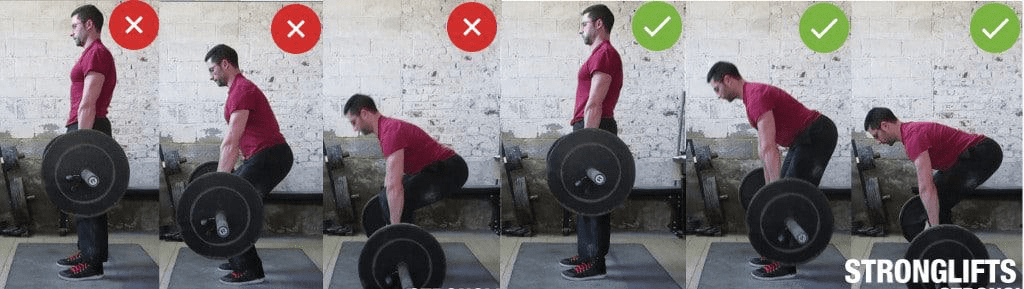
The most common mistake when performing a deadlift is losing a neutral spine. When your lower back starts to round as you lift, the stress shifts away from your hips (where it should be) and into your spine. Over time, that’s what can lead to strains or more serious issues.
Another common problem is mobility, or lack of it. If you don’t have the ankle, hip, or thoracic spine mobility to get into a strong starting position, your body will find a way to compensate. Usually, that means substituting proper hip hinge mechanics with lower back movement, which adds unnecessary strain.
Bar path is another detail that commonly gets overlooked. Ideally, the bar should stay close to your body in a straight line. But if it drifts forward, even slightly, it increases the torque on your lower back and makes the lift much harder than it needs to be.
With good coaching, proper progression, and attention to detail, the risks associated with deadlifting fade away.